Reading Time : 4-5 minutes
Table of Contents
1. Why Authentic Handloom Matters
2. 1. Look for Natural Irregularities
6. 5. Handloom Mark and GI Tag
7. 6. Pallu and Border Details
Why Authentic Handloom Matters
Across the world, buyers are discovering the magic of Indian handloom.
But as demand rises, so do machine-made duplicates that look similar but lack the soul of handwoven art.
Knowing how to differentiate handloom from powerloom helps you:
• Make authentic, valuable purchases
• Support real artisans
• Preserve centuries of weaving heritage
• Avoid cheap machine-made imitations
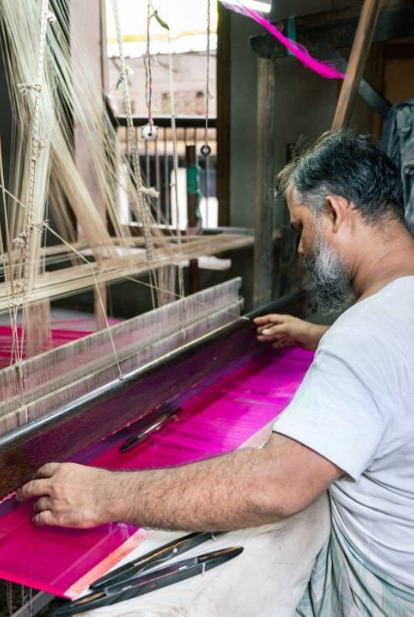
Handloom is slow, mindful, and deeply human and that is exactly what makes it special.
1. Look for Natural Irregularities in the Weave
Every handloom saree is woven manually, which means:
• Slight variation in motifs
• Uneven thread thickness
• Soft inconsistencies in texture
These small imperfections are signs of authenticity.
Machine-made sarees look overly perfect — identical motifs, uniform patterns, and no human touch.
2. Check the Reverse Side of the Saree

Turn the fabric over and check the back.
Handloom backside:
• Thread floats are visible
• Knots, joins, and small overlaps appear
• Motifs look slightly different
Powerloom backside:
• Looks extremely neat
• Threads are sealed chemically
• Motifs look identical on both sides
If the backside looks too “perfect,” it is likely machine-made.
3. Feel the Fabric — Handloom Has a Soul
Handloom fabrics like cotton, silk, tussar, and linen feel:
• Soft
• Breathable
• Slightly textured
• Alive
Machine-made replicas feel:
• Stiff
• Synthetic
• Too smooth
• Lifeless
Handlooms age beautifully like art — not like factory cloth.
4. The Pinch Test
Gently pinch the threads at the edge.
Handloom:
• Slight movement
• Mild thread flexibility
• Hand-twisted feel
Powerloom:
• Threads remain rigid
• No movement
• Machine-tight finish
This is a surprisingly accurate test for authenticity.
5. Check for Handloom Mark or GI Tag

In India, authentic handloom products often come with:
• Handloom Mark
• GI Tag (Geographical Indication)
Examples of GI-recognized crafts:
• Bhagalpuri Silk
• Madhubani Painting
• Bawan Buti
• Sikki Craft
• Tikuli Art
While international shipments may not always include tags, WeaveHand ensures artisan-certified authenticity.
6. Observe the Pallu and Border

Handloom sarees display:
• Variation in border width
• Hand-tied tassels
• Motifs that change subtly
• Weave patterns that flow naturally
Machine looms produce straight, rigid, identical designs.
Border perfection usually means powerloom.
7. Ask the Seller About the Artisan
A genuine seller always knows:
• Where the saree was woven
• Which artisan created it
• Story behind the craft
• Time taken to weave
A seller who cannot explain the weave is a clear red flag.
At WeaveHand, every saree is linked to the artisan who made it — with full transparency.
8. Price vs Craftsmanship
Handloom sarees take anywhere from 7 to 30 days to create.
They cannot be priced the same as machine-made pieces produced in minutes.
If the price looks unbelievably low, the saree is most likely not handwoven.
Hindi Q & A Section
Q1. Handloom saree original kaise pehchane?
Ans. Original handloom me halki uneven weaving hoti hai, backside me threads visible hote hain, aur fabric soft aur breathable lagta hai.
Q2. Handloom aur powerloom me kya difference hota hai?
Ans. Handloom haath se banta hai, isliye natural texture hota hai. Powerloom machine se hota hai, jisme sab kuch identical hota hai.
Q3. Original handloom saree ka price kitna hota hai?
Ans. Basic handloom ₹1500 se start hote hain. Madhubani, Bawan Buti jaise artisanal sarees ₹5000 se ₹20000 tak hoti hain.
Q4. Kya handloom mark zaroori hota hai?
Ans. Haan, yeh authenticity proof karta hai. But WeaveHand jaise trusted brands artisan-verified pieces bhi dete hain.
Q5. Madhubani ya Bawan Buti saree kaise check kare?
Ans. Motifs hand-painted ya handwoven honge, backside me human touch dikhega, aur har saree thodi unique hogi.
Conclusion
Handloom sarees are more than clothing — they are heritage, culture, and stories woven together.
Once you learn how to identify the original handloom, you will always feel the beauty in its texture, its imperfections, and its soul.
Choosing handloom means choosing sustainability, dignity for artisans, and a rich legacy of Indian craftsmanship.
WeaveHand Assurance

At WeaveHand, every saree comes straight from the artisan’s loom with complete transparency and authenticity.
You support real families, real craftsmanship, and real heritage — one weave at a time.
Explore handloom with soul.
Explore WeaveHand.